


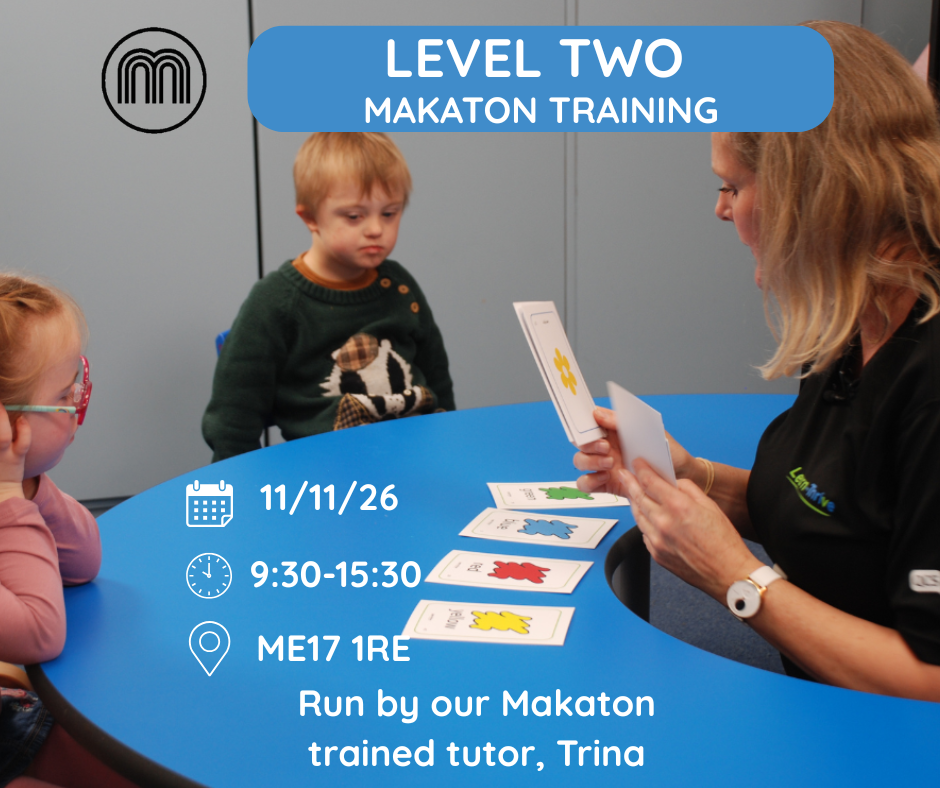
Get your Makaton Level Two Training Certificate with our very own Makaton Tutor Trina Pollard.
Communication Groups

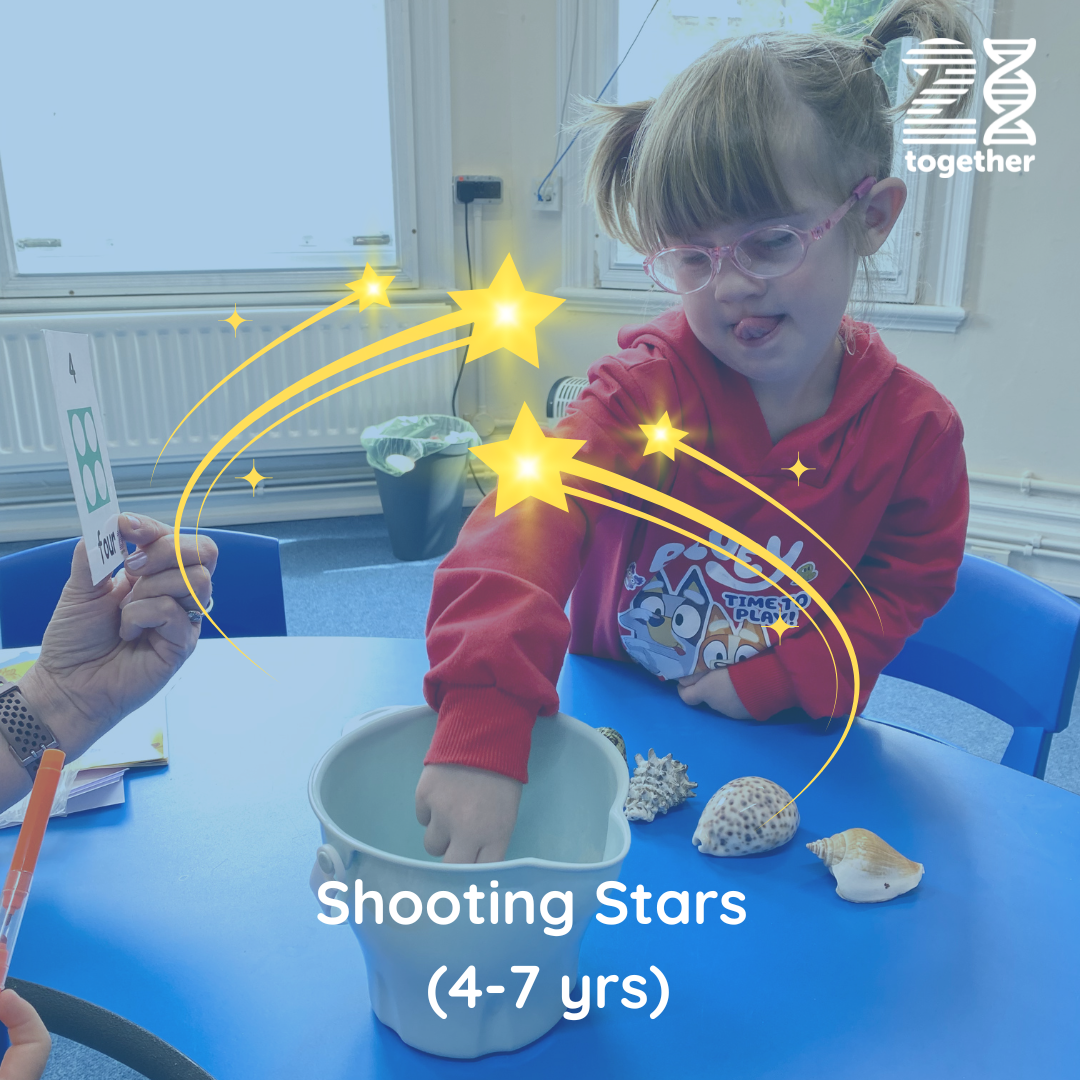
Using syndrome specific approaches to learning, these groups will cover literacy, numeracy, self-help, and social emotional skills. Resources will be provided to parents to continue learning opportunities at home.

S-Club sessions are social groups for young people with Down’s syndrome aged 11 to early 20s. The club is split into three sessions; smiLE, skills and social.

Using syndrome specific approaches to learning, these groups will cover literacy, numeracy, self-help, and social emotional skills. Resources will be provided to parents to continue learning opportunities at home. Pre-school and nursery staff will also be invited in to observe and continue work within their settings.

Using syndrome specific approaches to learning, these groups will cover literacy, numeracy, self-help, and social emotional skills. Resources will be provided to parents to continue learning opportunities at home. Pre-school and nursery staff will also be invited in to observe and continue work within their settings.

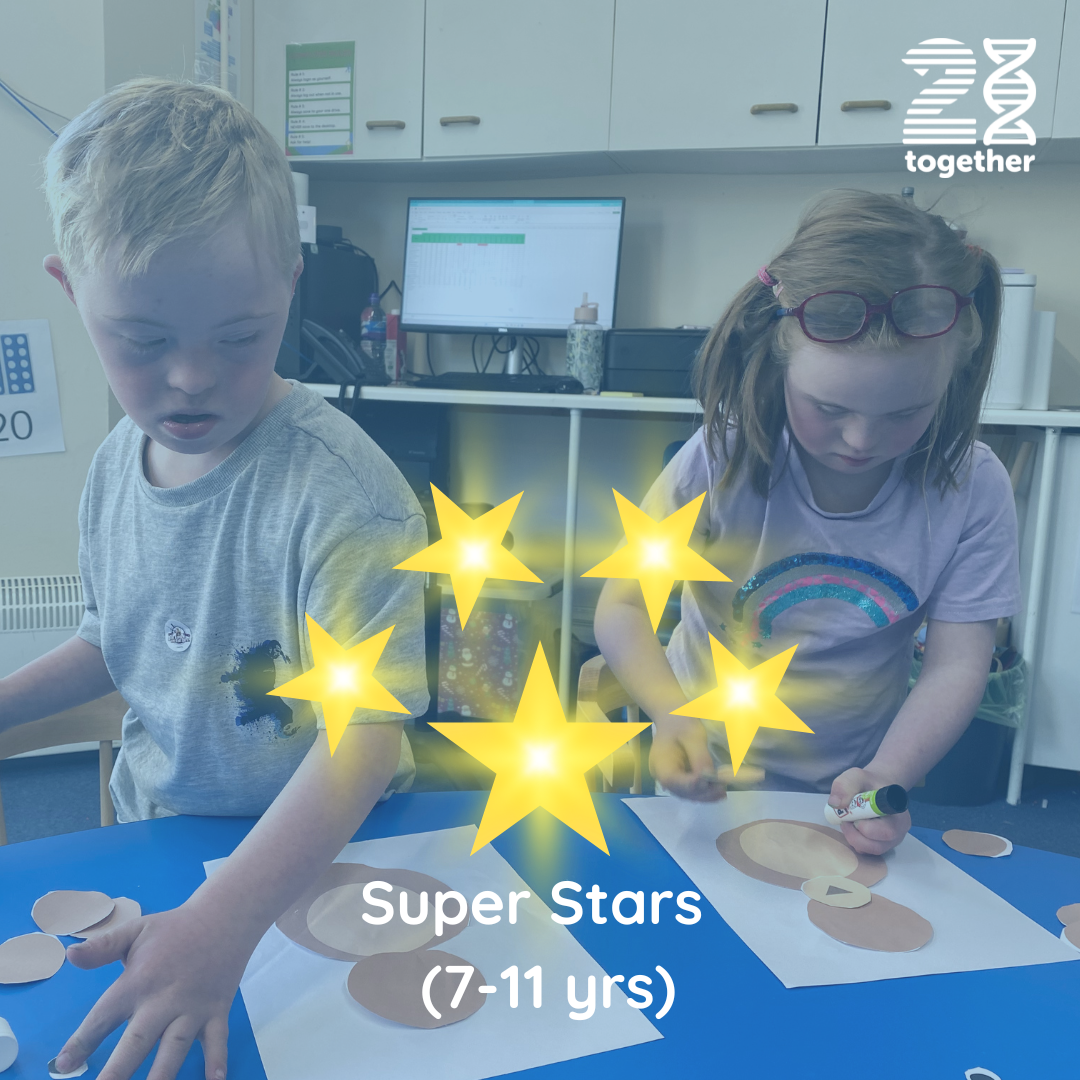
For children aged 7 – 11 years old these small groups focus on speech and language and social communication, yet we also provide additional support for children and young people to build self-awareness, awareness of others and socially appropriate behaviour. Each term is topic-based and allows our children to explore areas such as relationships, community, time, and language for identity and transitions in a fun and inclusive environment.
S-Club sessions are social groups for young people with Down’s syndrome aged 11 to early 20s. The club is split into three sessions; smiLE, skills and social.
Using syndrome specific approaches to learning, these groups will cover literacy, numeracy, self-help, and social emotional skills. Resources will be provided to parents to continue learning opportunities at home. Pre-school and nursery staff will also be invited in to observe and continue work within their settings.
Using syndrome specific approaches to learning, these groups will cover literacy, numeracy, self-help, and social emotional skills. Resources will be provided to parents to continue learning opportunities at home. Pre-school and nursery staff will also be invited in to observe and continue work within their settings.

Using syndrome specific approaches to learning, these groups will cover literacy, numeracy, self-help, and social emotional skills. Resources will be provided to parents to continue learning opportunities at home.
S-Club sessions are social groups for young people with Down’s syndrome aged 11 to early 20s. The club is split into three sessions; smiLE, skills and social.
Using syndrome specific approaches to learning, these groups will cover literacy, numeracy, self-help, and social emotional skills. Resources will be provided to parents to continue learning opportunities at home. Pre-school and nursery staff will also be invited in to observe and continue work within their settings.
Using syndrome specific approaches to learning, these groups will cover literacy, numeracy, self-help, and social emotional skills. Resources will be provided to parents to continue learning opportunities at home. Pre-school and nursery staff will also be invited in to observe and continue work within their settings.
For children aged 7 – 11 years old these small groups focus on speech and language and social communication, yet we also provide additional support for children and young people to build self-awareness, awareness of others and socially appropriate behaviour. Each term is topic-based and allows our children to explore areas such as relationships, community, time, and language for identity and transitions in a fun and inclusive environment.
S-Club sessions are social groups for young people with Down’s syndrome aged 11 to early 20s. The club is split into three sessions; smiLE, skills and social.
Using syndrome specific approaches to learning, these groups will cover literacy, numeracy, self-help, and social emotional skills. Resources will be provided to parents to continue learning opportunities at home. Pre-school and nursery staff will also be invited in to observe and continue work within their settings.