What is Down’s syndrome?
What is Down’s syndrome?
Down’s syndrome (also known as Down syndrome) is a genetic condition that occurs around the time of conception. People with Down’s syndrome have an extra copy of chromosome 21, meaning they have 47 chromosomes instead of the usual 46. This is known as Trisomy 21.
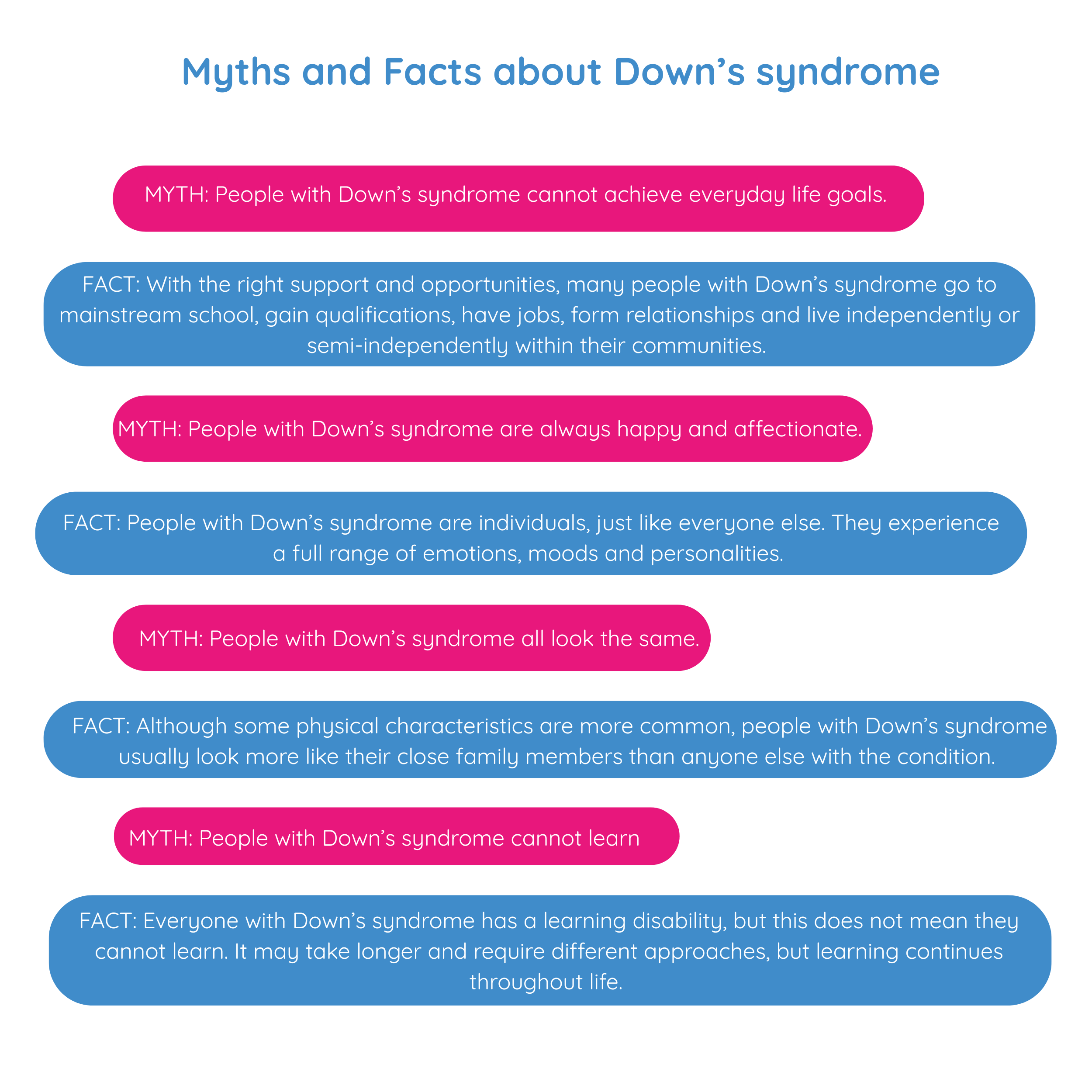
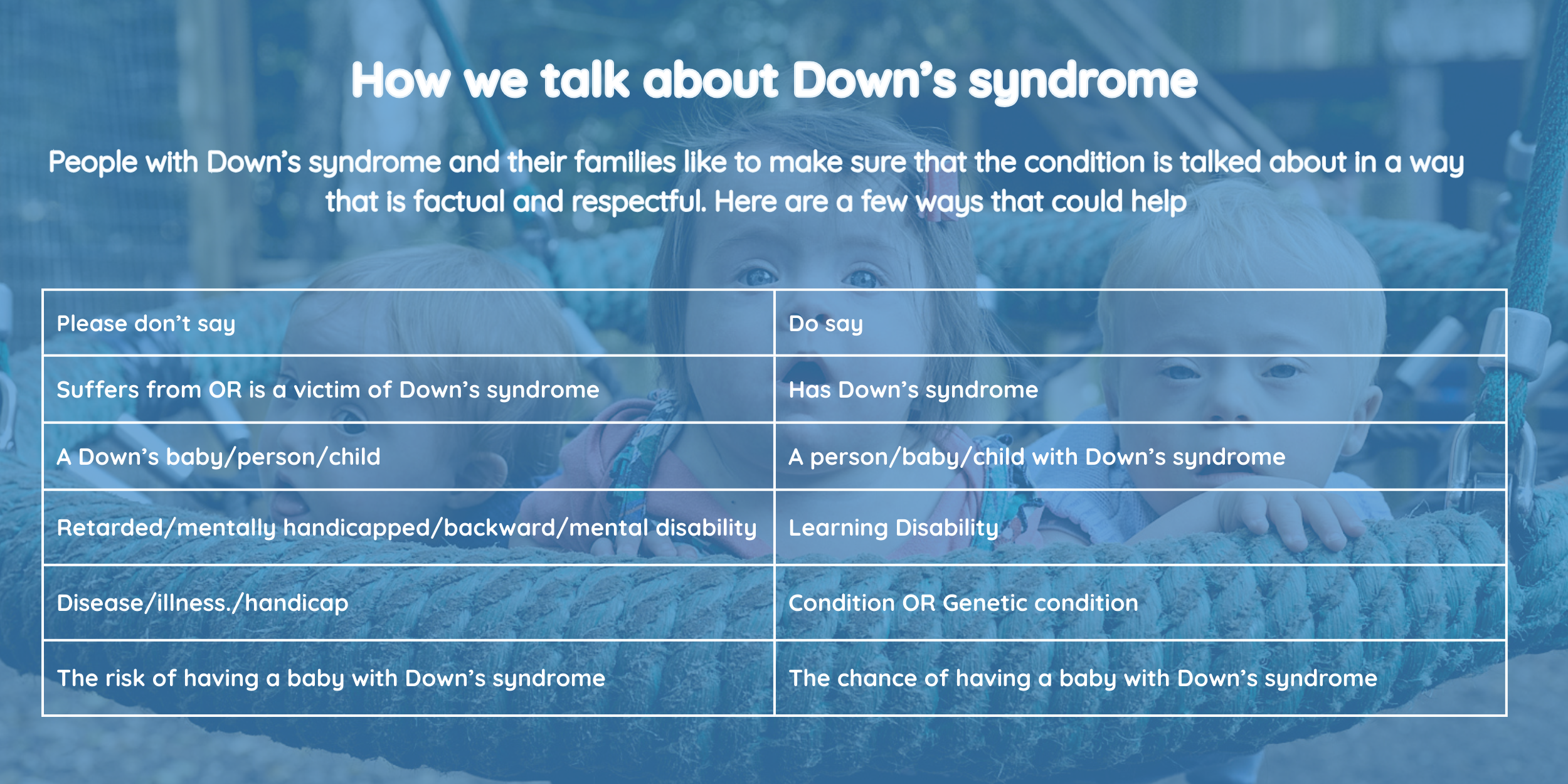
Down’s syndrome is not an illness or a disease, and people do not “suffer” from it. It is a lifelong condition that affects learning and development, but it does not define who a person is. People with Down’s syndrome are individuals, each with their own personality, interests, strengths and family traits.
Everyone with Down’s syndrome will have some degree of learning disability, which means they may learn and develop more slowly than other children. However, with early support, encouragement and the right opportunities, most people with Down’s syndrome today will walk and talk, read and write, attend mainstream schools, gain qualifications, form friendships, and lead rich, fulfilling and often semi-independent lives.
Down’s syndrome usually occurs by chance and is not caused by anything parents did or did not do. It can happen to anyone, in all races, cultures and social backgrounds. Although the chance of having a baby with Down’s syndrome increases with maternal age, most babies with Down’s syndrome are born to younger women, reflecting higher overall birth rates in this group.
How common is Down’s syndrome?
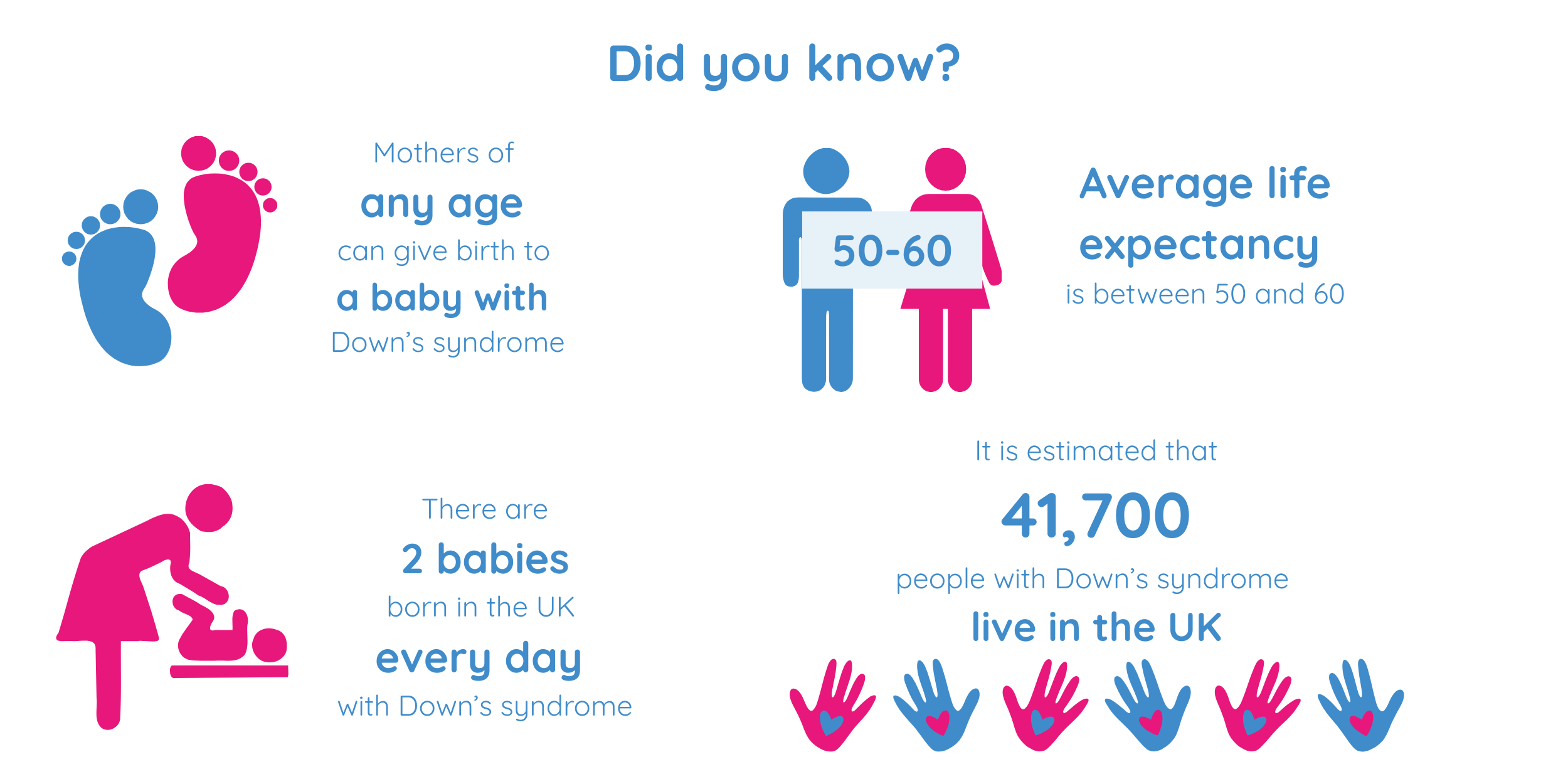
Down’s syndrome is the most common genetic cause of learning disability. In the UK, around one in every 1,000 babies is born with Down’s syndrome — approximately two babies every day.
Thanks to advances in healthcare and support, life expectancy has increased significantly. Today, many people with Down’s syndrome live into their 50s and 60s, with some living into their 70s and beyond.